
Understanding the condition of your car's tires goes beyond simply knowing they're round and black. They are the sole point of contact between your vehicle and the road, directly influencing everything from handling and braking to fuel efficiency and overall safety. Regular checks for both pressure and tread depth are not just recommendations; they are fundamental practices for any responsible driver.
Initial Assessment: Tire Health Fundamentals
Your vehicle's tires are complex components engineered for specific performance parameters. Maintaining correct tire pressure ensures the tire's full contact patch meets the road, distributing weight evenly and maximizing grip. Incorrect pressure, whether over or under-inflated, can lead to uneven wear, reduced traction, compromised handling, and even tire failure. Similarly, adequate tread depth is critical for displacing water on wet roads, preventing hydroplaning, and providing necessary grip in various conditions. Monitoring these two factors regularly can significantly extend tire life and, more importantly, enhance driving safety.
The Right Gear for Tire Vigilance
To accurately assess your tires, you'll need a few reliable tools. The quality of these instruments directly impacts the precision of your readings.
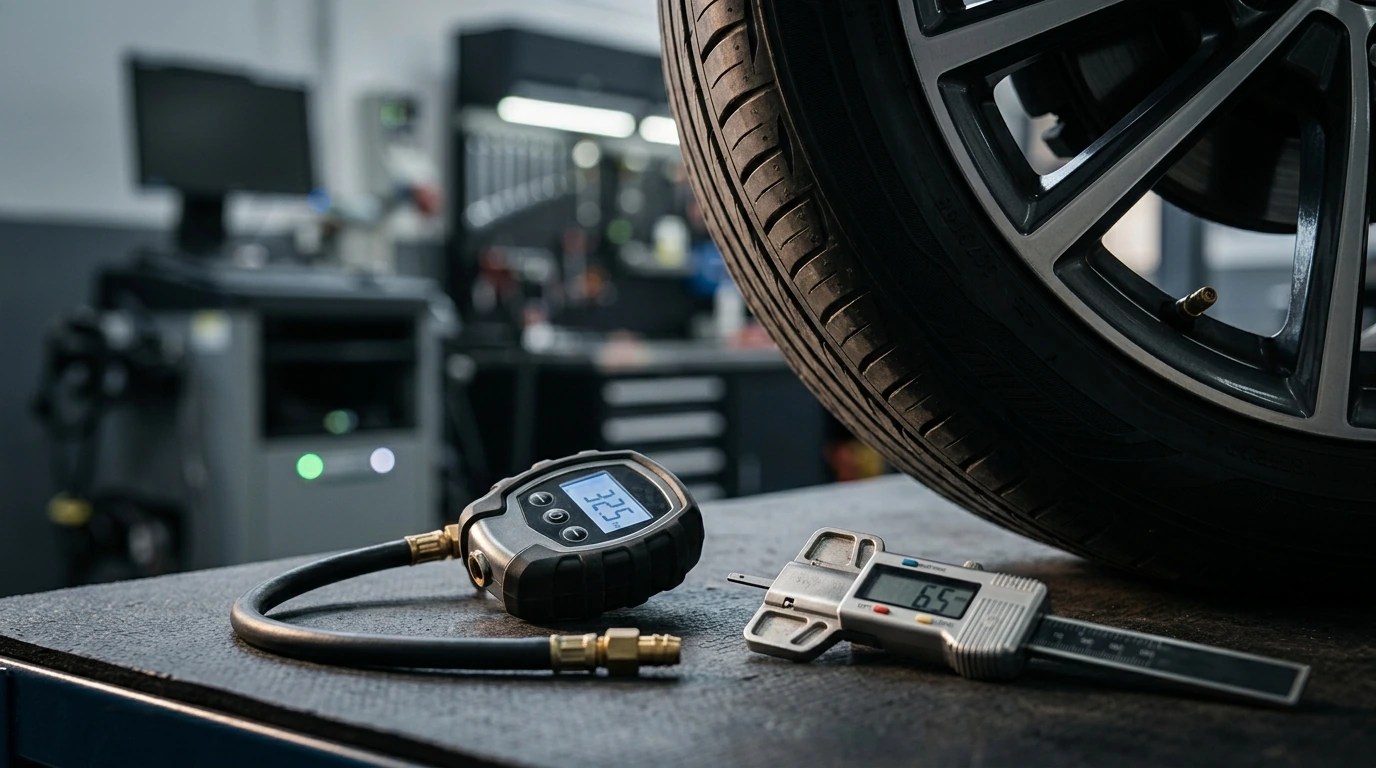
- Tire Pressure Gauge: While basic stick gauges are common, digital gauges often provide more precise readings and are easier to read. Look for gauges that offer a clear display and a robust build, capable of withstanding regular use. Some modern vehicles also feature built-in Tire Pressure Monitoring Systems (TPMS), but a manual check remains a valuable verification.
- Tread Depth Gauge: These come in digital and analog forms. A digital gauge offers numerical readings in millimeters or 32nds of an inch, providing a clear, objective measurement. An analog gauge, often resembling a small ruler, is also effective. For a quick, informal check, a US penny can serve as a rudimentary indicator, though it lacks the precision of a dedicated gauge.
- Gloves: Optional, but recommended for keeping hands clean.
When selecting these tools, prioritize accuracy and ease of use. A well-constructed gauge will provide consistent results over time, making your maintenance routine more reliable.
A Hands-On Guide to Tire Inspection
Performing these checks is straightforward and requires minimal time. It's best to check tire pressure when the tires are "cold," meaning the vehicle hasn't been driven for at least three hours or more than a mile.
Checking Tire Pressure Accurately
- Locate Recommended Pressure: The correct tire pressure for your vehicle is typically found on a sticker inside the driver's side door jamb, in the glove compartment, or in your owner's manual. Do NOT use the "MAX. PRESS" number on the tire sidewall; this is the maximum allowable pressure, not the recommended operating pressure.
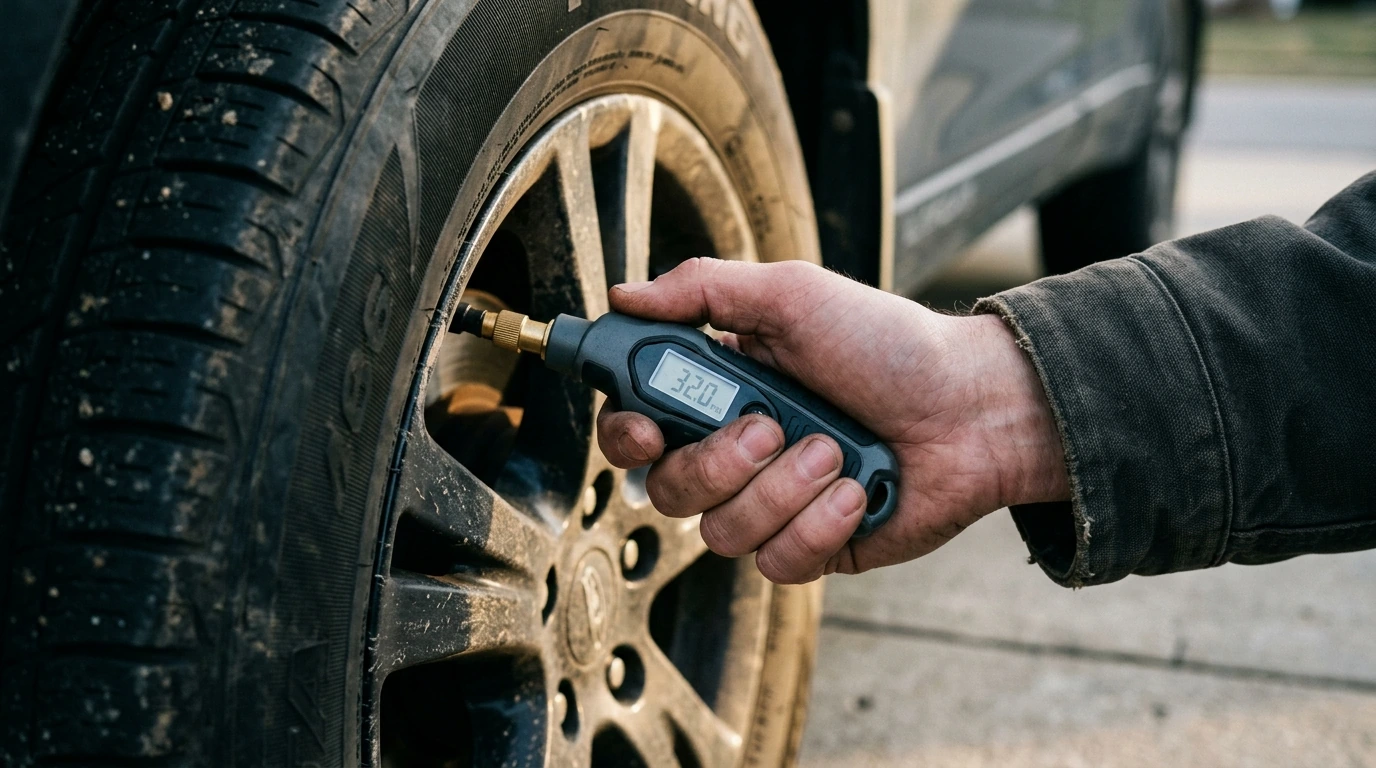
- Remove Valve Cap: Unscrew the small plastic cap from the tire's valve stem. Keep it somewhere safe.
- Attach Gauge: Firmly press the tire pressure gauge onto the valve stem. You should hear a brief hiss of air as the gauge seals, then the reading will appear. If using a digital gauge, it will typically beep or display the reading. For a stick gauge, the indicator will pop out.
- Read and Adjust: Compare the reading to your vehicle's recommended pressure.
- If the pressure is too high, gently press the small pin in the center of the valve stem to release air until the correct pressure is reached.
- If the pressure is too low, add air using an air compressor (available at most gas stations or as a portable unit) until the correct pressure is reached.
- Replace Valve Cap: Once the correct pressure is set, replace the valve cap to protect the valve stem from dirt and moisture.
- Repeat for All Tires: Don't forget the spare tire, if applicable, as it also needs to be properly inflated.
Measuring Tread Depth with Confidence
Legal minimum tread depth varies by region, but a general consensus for safe driving is often 2/32nds of an inch (1.6 mm). Many experts recommend replacing tires when tread reaches 4/32nds of an inch (3.2 mm) for optimal wet weather performance.
- Locate Tread Wear Indicators: Most tires have small "wear bars" molded into the grooves. These are typically flat rubber bars running perpendicular to the tread. If the tread is worn down to be flush with these bars, the tire is at or below the legal minimum depth and needs replacement.
- Use a Tread Depth Gauge: Insert the probe of the gauge into one of the main tread grooves, avoiding the wear bars. Push the shoulder of the gauge flush with the tire surface. Read the measurement.
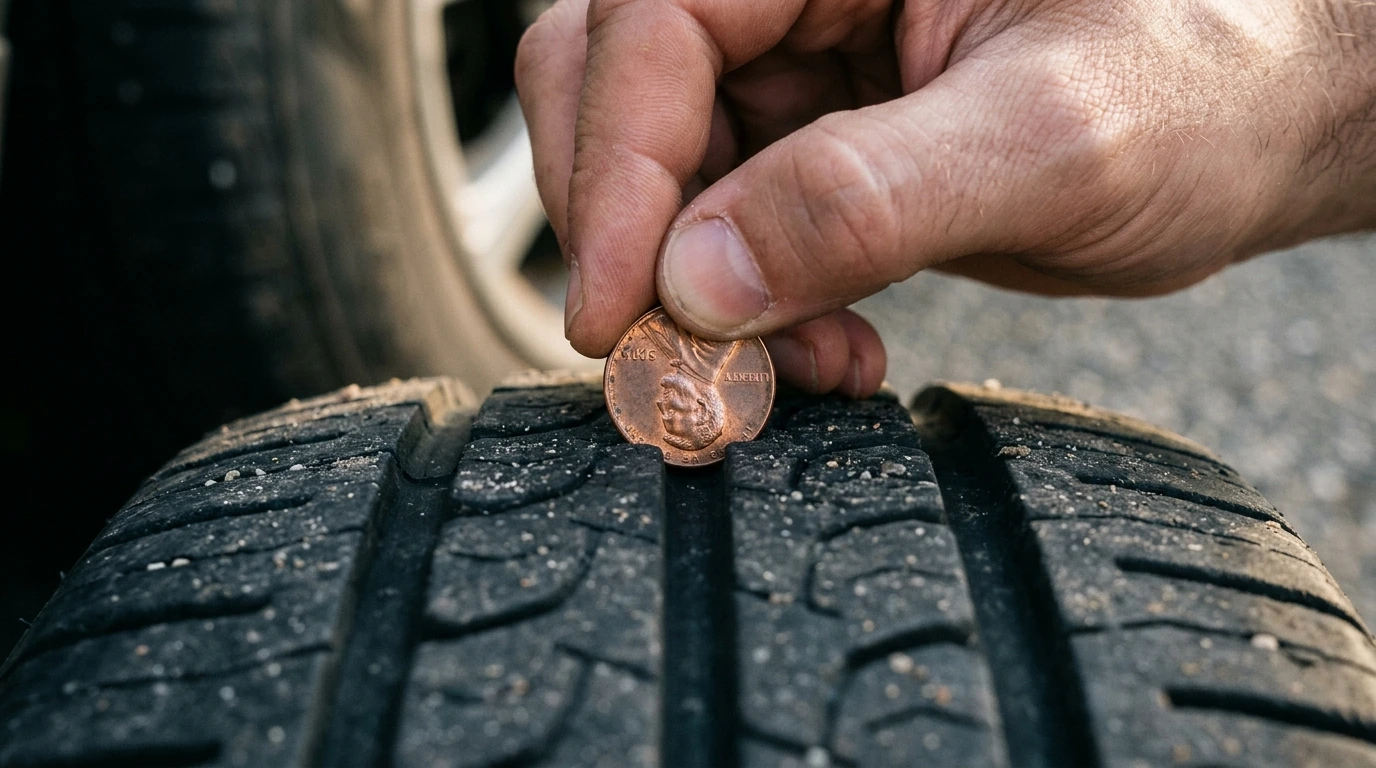
- The Penny Test (Informal): Place a US penny into a tread groove with Lincoln's head upside down and facing you.
- If you can see all of Lincoln's head, your tread is likely below 2/32nds of an inch and needs replacement.
- If Lincoln's head is partially obscured, your tread is likely above 2/32nds of an inch, but continued monitoring is essential.
- Check Multiple Spots: Measure tread depth in several locations around each tire, as wear can be uneven. Also, check both the inner and outer edges of the tire. Significant differences in tread depth across the tire can indicate alignment issues or improper inflation.
The Upsides of Diligence and What to Watch For
Consistently checking your tire pressure and tread depth offers substantial benefits. Properly inflated tires contribute to better fuel economy, improved handling, and reduced stopping distances. They also wear more evenly, extending their lifespan and saving you money on premature replacements. Conversely, neglecting these checks can lead to:
- Reduced Safety: Increased risk of hydroplaning, longer braking distances, and potential blowouts.
- Higher Operating Costs: Poor fuel efficiency due to increased rolling resistance and accelerated tire wear.
- Compromised Ride Quality: Over-inflated tires can lead to a harsher ride, while under-inflated tires can feel sluggish.
A noticeable drawback of manual checks is the need for consistency. Without a routine, it's easy to overlook these vital maintenance tasks. However, the simplicity and significant benefits far outweigh this minor inconvenience.
Investing in Tire Longevity and Safety
For any driver, from the daily commuter to the occasional road-tripper, regular tire maintenance is a non-negotiable aspect of vehicle ownership. The small investment in a quality tire gauge and a few minutes each month can prevent costly repairs, improve your vehicle's performance, and most importantly, keep you and your passengers safer on the road. This practice is particularly crucial for those who frequently carry heavy loads, drive on uneven terrain, or experience significant temperature fluctuations.
Ultimately, understanding and acting on the "stories" your tires tell you about their grip and air is a fundamental skill that pays dividends in safety, performance, and peace of mind.
Frequently Asked Questions
How often should I check my tire pressure?
It's generally recommended to check your tire pressure at least once a month, and always before long trips. Temperature changes can also affect pressure, so checking more frequently during seasonal shifts is wise.
What is the legal minimum tread depth?
In many regions, the legal minimum tread depth is 2/32nds of an inch (1.6 mm). However, for optimal safety, especially in wet conditions, many automotive experts recommend replacing tires when the tread reaches 4/32nds of an inch (3.2 mm).
Can I rely solely on my car's TPMS for tire pressure?
While TPMS (Tire Pressure Monitoring System) is a helpful warning system, it's not a substitute for manual checks. TPMS typically alerts you when pressure drops significantly, but it may not always indicate slightly low pressure that still impacts performance and wear. A manual gauge provides a precise reading.
What causes uneven tire wear?
Uneven tire wear can be caused by several factors, including incorrect tire pressure (under or over-inflation), improper wheel alignment, unbalanced tires, or worn suspension components. Regular checks can help identify these issues early, allowing for timely correction.