
A Caterpillar 320 Next Gen excavator sits idle in Bay 4 with an active diagnostic trouble code pulsing on our service monitor. Hooking up our diagnostic interface to the SAE J1939 CAN-bus network reveals SPN 1086 FMI 3: pilot hydraulic pressure signal voltage above normal. Physical testing with a calibrated analog gauge reveals a pilot pressure fluctuation of 15 bar when the hydraulic oil reaches its operational thermal peak of 85°C. The culprit is a recently installed aftermarket pilot relief valve with a critical dimensional deviation of exactly 0.12 mm on the internal spool land. This microscopic tolerance failure is a stark reminder of why enterprise spare parts procurement cannot be left to low-bidder catalog sourcing.
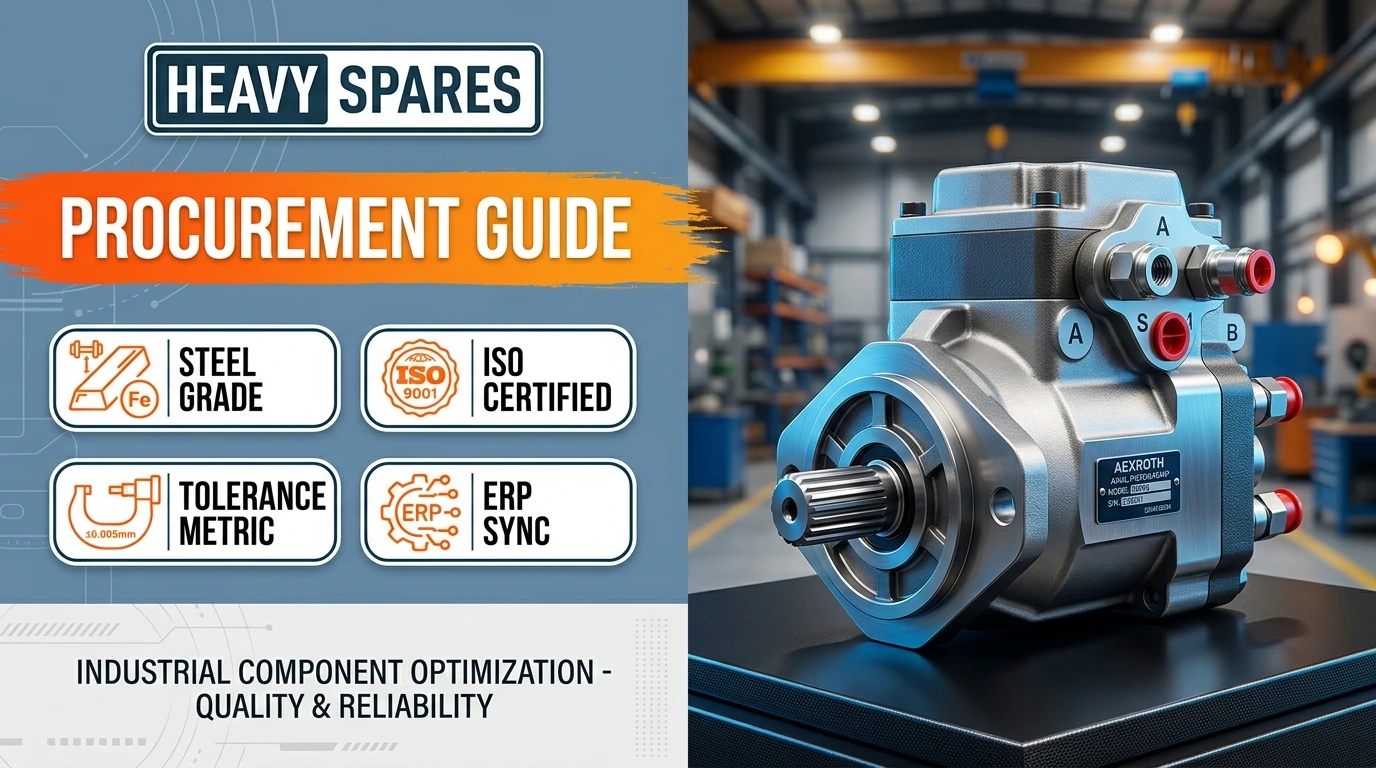
The High Cost of Tolerance Deviations in Enterprise Spares
In heavy industrial operations, "will-fit" parts represent an operational hazard. When procuring spare parts for fleet operations, minor deviations in metallurgy and machining tolerances yield catastrophic compounding failures. For instance, an off-brand oil filter element (such as an unverified equivalent to a Cat 1R-1808) might match the thread pitch of the mounting stud but fail to specify the correct bypass valve cracking pressure. Under cold-start conditions with high-viscosity oil, a premature bypass opening dumps unfiltered contaminants directly into the main gallery, scoring the crankshaft journals of a Cummins QSB6.7 engine within hours.
To mitigate these risks, procurement teams must look past the purchase price and analyze the Total Cost of Ownership (TCO) using empirical metrics:
- Metallurgical Composition: Ensure replacement gears and shafts match the exact Rockwell hardness (HRC) of the OEM spec. A gear with an HRC rating of 52 instead of the specified 58 will experience rapid spalling under high-torque loads.
- Elasticity and Seal Integrity: O-rings and elastomeric seals must be verified for chemical compatibility with synthetic fluids. Substituting standard Nitrile (NBR) for Fluorocarbon (Viton) in high-temperature hydraulic lines operating above 100°C leads to rapid embrittlement and high-pressure blowouts.
- Response Latencies: Solenoid valves used in electro-hydraulic systems must match the precise millisecond response times expected by the machine's electronic control unit (ECU). A sluggish solenoid causes jerky control inputs, triggering safety derate modes.

Establishing an Empirical Vendor Vetting Protocol
Vetting a replacement parts vendor requires a structured engineering audit rather than a simple review of their sales brochure. Enterprise procurement departments should implement a multi-tiered validation framework before signing supply agreements. This begins with verifying the supplier's manufacturing certifications. A reputable vendor must possess active ISO 9001:2015 credentials, and for critical structural components, welding certifications under AWS D1.1 or ISO 3834 are non-negotiable.
Furthermore, demand a Level 3 Production Part Approval Process (PPAP) pack for any non-OEM critical components. This pack should include material test reports (MTRs), dimensional inspection layouts, and failure mode and effects analyses (FMEA). If a vendor hesitates to provide chemical analysis certifications verifying the grade of steel used in their track links or bucket pins, remove them from your bidding pool immediately.
PRO TIP: The "Golden Sample" Trap
Never approve a vendor based solely on a hand-delivered "golden sample." Always run a randomized batch test of 5 to 10 units sourced directly from their production line. Measure these samples for thread concentricity, surface roughness (Ra), and seal seat tolerances using a coordinate measuring machine (CMM) before approving the vendor for bulk supply contracts.
Predictive Procurement: Integrating Telematics with ERP
Modern enterprise procurement has moved away from reactive ordering. By integrating machine telematics directly with your Enterprise Resource Planning (ERP) platform (such as SAP or Oracle NetSuite), parts can be ordered dynamically based on real-time wear metrics. For example, tracking the duty cycle of a wheel loader's transmission via CAN-bus temperature logs allows the ERP to automatically purchase a replacement friction plate kit when the cumulative thermal load index indicates the component is within 10% of its calculated fatigue limit.
This integration significantly reduces warehouse carrying costs. Instead of stocking expensive, slow-moving components like final drive assemblies or main control valves on speculation, parts arrive at the maintenance facility exactly 48 hours before the scheduled preventative maintenance window. This reduces dead inventory and ensures maximum capital efficiency across the entire enterprise fleet.
Strategic Takeaways for Fleet Managers
Transitioning from a reactive, cost-first purchasing model to an engineering-driven, quality-first procurement strategy is the most effective way to eliminate unscheduled equipment downtime. Prioritize vendors that offer transparent metallurgical tracing, robust digital integration capabilities, and guaranteed dimensional compliance. By treating your spare parts supply chain as a critical engineering system rather than an administrative expense, you protect your machinery, optimize your maintenance intervals, and safeguard your operational bottom line.