
Managing a commercial fleet requires minimizing Total Cost of Ownership (TCO) while maximizing vehicle uptime. When a Freightliner Cascadia with a Detroit Diesel DD15 engine or a transit fleet of Ford Transit 3.5L EcoBoost vans sits idle due to a backordered component, losses accumulate by the hour. Sourcing replacement parts through traditional local retail channels can inflate maintenance budgets by up to 45% due to multi-tiered distributor markups.
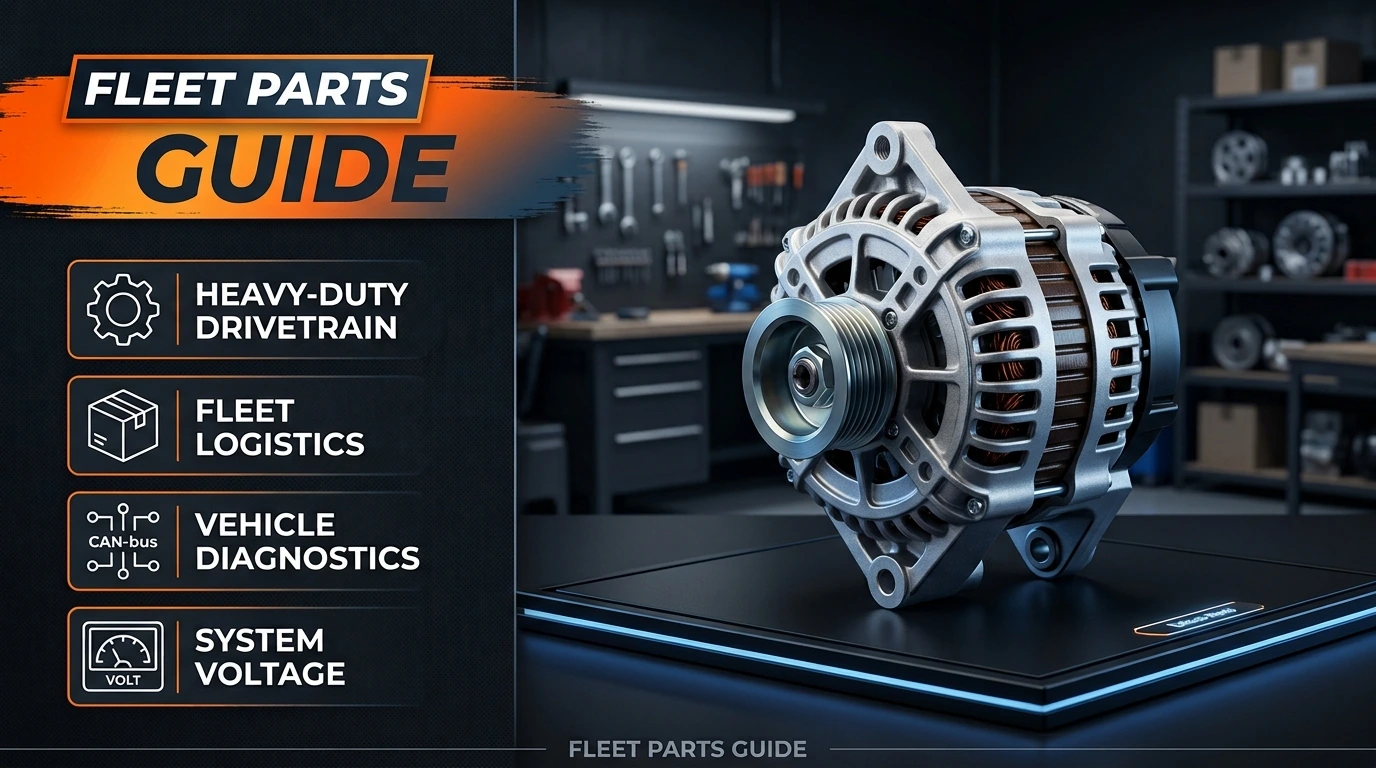
Transitioning to an online wholesale procurement model streamlines your supply chain, bypasses regional distributor markups, and provides direct access to deep inventory pools. However, navigating the digital wholesale landscape requires a rigorous, systematic approach to ensure part compatibility, verify component quality, and establish reliable logistics pipelines.
Prerequisites & Procurement Tools Checklist
Before initiating contact with online wholesale distributors or registering for B2B portals, assemble the following technical documentation and tools:
- Fleet VIN Registry: A complete database of your fleet's 17-digit Vehicle Identification Numbers (conforming to ISO 3779) to ensure precise OEM catalog matching.
- Tax-Exempt & Business Credentials: Your Federal Employer Identification Number (EIN), state-issued Reseller Permit/Certificate, and commercial liability insurance documentation. Most Tier-1 wholesale platforms require these to bypass sales tax and unlock commercial pricing tiers.
- Diagnostic Hardware & Protocols: An RP1210-compliant vehicle interface (e.g., Nexiq USB-Link 3) capable of reading SAE J1939 (heavy-duty CAN-bus) and OBD-II (ISO 15765) diagnostic trouble codes (DTCs) to pinpoint exact failing components before ordering.
- Digital Calipers & Thread Pitch Gauges: For physical verification of critical dimensions (e.g., rotor thickness, sensor thread pitch like M18x1.5) to cross-reference with digital spec sheets.
PRO TIP: Beware of Gray-Market Counterfeits
Open public marketplaces are flooded with counterfeit critical sensors and mechanical components. When sourcing online, only purchase from authorized distributors who provide a direct certificate of conformity from manufacturers like Bosch, Delco Remy, or Donaldson. A counterfeit MAP sensor off by just 50 millivolts can trigger persistent engine derate cycles on heavy-duty diesel platforms.
Step-by-Step Wholesale Procurement Guide
Step 1: Standardize Your Fleet Database and VIN Decoders
Never rely on generic vehicle descriptions (e.g., "2018 Ford Transit Starter"). Instead, use your VIN database to extract precise build data. Load your VINs into a professional-grade decoder integrated with an Electronic Parts Catalog (EPC). This step extracts exact engine codes, alternator outputs (e.g., 150-amp vs. 250-amp dual-alternator setups), and suspension packages. Document these specifications in your Fleet Management Software (FMS) to prevent manual lookup errors during emergency ordering events.
Step 2: Establish Verified B2B Wholesale Accounts
Bypass retail-facing web portals. Apply directly for commercial accounts with dedicated B2B wholesale distributors (e.g., FinditParts, FleetPride, or regional warehouse distributors). During registration:
- Upload your Reseller Permit to establish tax-exempt status.
- Request a dedicated commercial account manager. This individual is your direct line for volume discounts, freight consolidation, and resolving shipping discrepancies.
- Negotiate credit terms (e.g., Net 30 or Net 60) rather than paying via credit card per transaction. This improves cash flow and simplifies accounting reconciliation.
Step 3: Leverage API-Driven Part Cross-Referencing
When sourcing wear items (such as oil filters, air filters, and brake pads), avoid buying exclusively by OEM part numbers, which carry a premium markup. Utilize cross-referencing databases to find equivalent Tier-1 aftermarket alternatives:
- Locate the OEM part number (e.g., Ford Motorcraft
FL-2051Soil filter). - Input this number into cross-reference engines provided by premium manufacturers like Donaldson (e.g.,
P550388) or Baldwin. - Verify that the micron rating, bypass valve pressure settings (measured in PSI or bar), and thread dimensions match the OEM specifications exactly.
Step 4: Execute Logistics and Core Return Workflows
Wholesale pricing often relies on core exchanges for heavy components like remanufactured alternators, steering gears, and turbochargers. Set up a dedicated "Core Return Bin" in your shop. When purchasing a remanufactured component online, note the core deposit fee (which can exceed $300 for a Delco Remy 39MT starter). Ensure your online supplier provides pre-printed return shipping labels and clearly states the core return window (typically 30 to 60 days) to guarantee full deposit refunds.
Common Pitfalls to Avoid
- Ignoring LTL Freight Thresholds: Heavy items like brake drums, flywheels, and leaf springs incur massive individual shipping costs. Ordering these items piecemeal destroys wholesale savings. Consolidate heavy orders to meet Less-Than-Truckload (LTL) pallet minimums (typically 150 lbs+) to unlock flat-rate freight shipping.
- Neglecting Return Policy Details: Unlike local brick-and-mortar stores, online wholesalers often charge 15% to 25% restocking fees for returned parts that were ordered in error. Double-check fitment tolerances before hitting "submit."
- Skipping Component Traceability: Installing unbranded, non-traceable critical components (such as tie rod ends or wheel hub assemblies) exposes your fleet to catastrophic liability in the event of an on-road mechanical failure. Ensure all parts carry industry-standard certifications (e.g., ISO/TS 16949).
Post-Implementation Verification Checklist
Once your wholesale shipment arrives at your maintenance facility, perform these verification steps before releasing the parts to your technicians:
- Visual Inspection: Check for shipping damage, hairline fractures in cast metal housings, and torn protective dust boots.
- Dimensional Verification: Use digital calipers to verify critical dimensions against the manufacturer's spec sheet (e.g., brake rotor nominal thickness within ±0.1 mm).
- Electrical Resistance Testing: For sensors (such as ABS wheel speed sensors), use a digital multimeter to measure internal resistance (ohms) to ensure it falls within the OEM spec range (typically 1,000 to 2,000 ohms depending on the platform).
- Core Tagging: Immediately tag the outgoing core with the RMA barcode generated by the online portal to secure your core deposit refund.
Frequently Asked Questions
How do I handle warranty claims for fleet parts purchased online?
Authorized online wholesalers honor manufacturer warranties. To file a claim, you must provide the original purchase invoice, the vehicle's mileage at installation, the mileage at failure, and a diagnostic report (such as a scan tool printout showing the active DTC). Most wholesalers will ship a replacement part immediately and issue credit once the failed component is returned and analyzed by the manufacturer.
What is the difference between OEM, OES, and Tier-1 Aftermarket parts?
OEM (Original Equipment Manufacturer) parts are branded by the vehicle maker (e.g., Motorcraft or ACDelco). OES (Original Equipment Supplier) parts are made by the same company that built the factory parts (e.g., Bosch or Denso) but come in the supplier's own packaging, often saving you 20-30% while offering identical performance. Tier-1 Aftermarket parts are engineered by reputable companies to meet or exceed OEM specifications, offering a cost-effective alternative for older fleet vehicles.
How can I integrate online parts ordering with my existing Fleet Management Software (FMS)?
Most modern FMS platforms (like Fleetio or Whip Around) feature open APIs that connect directly with major wholesale parts databases. This integration allows your shop's work orders to automatically generate parts requests, check real-time distributor inventory, and place orders directly without leaving your fleet management dashboard, reducing data-entry errors.